Skip to content
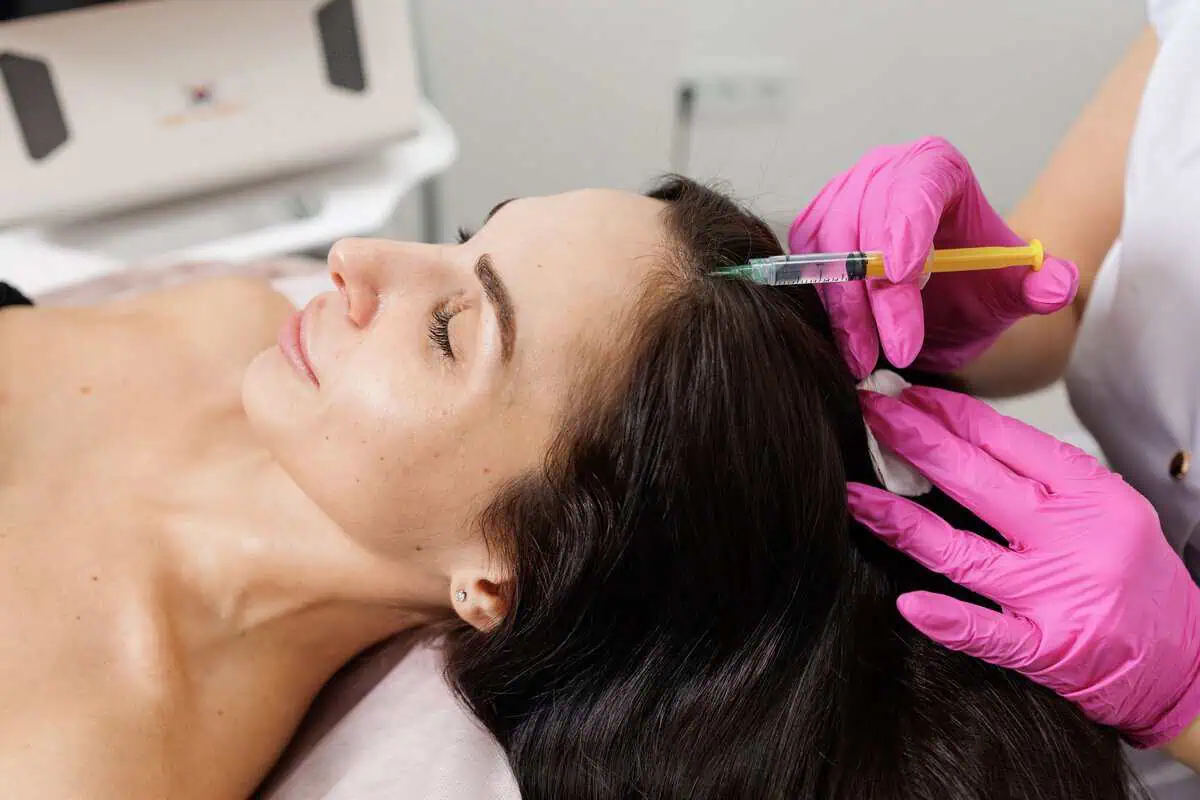
Table of Contents
Hair thinning can change the way your hair looks and feels, from a wider part to reduced volume and a visible scalp. At Elevate Aesthetics, we take a personalized approach to identifying the factors behind thinning and creating a targeted hair thinning treatment plan. With PRF, patients have a non-surgical option designed to support active follicles, improve scalp vitality, and encourage fuller-looking hair over time.
Why Hair Starts to Thin
Genetics is one of the most common reasons hair density changes over time. Hereditary thinning can affect men and women, although the pattern may look different. Men may notice recession at the hairline or crown, while women often see diffuse thinning along the part or top of the scalp. This type of thinning tends to happen gradually because follicles become smaller and produce thinner strands.
Hormonal changes can also affect the growth cycle. Postpartum changes, menopause, thyroid imbalance, and conditions such as polycystic ovary syndrome may contribute to shedding or reduced density. Thinning may also follow a major physical or emotional stressor. Illness, surgery, weight changes, fever, or intense stress can push more hairs into the resting phase, with shedding appearing weeks or months later.
Nutrition deserves attention as well. Hair growth depends on adequate protein, iron, vitamins, minerals, and metabolic health. Deficiencies do not explain every case of hair loss, but they can make the scalp less supportive of healthy growth. Medications and medical conditions may also play a role, which is why professional guidance matters before starting any plan.
External stress on the hair can add to the problem. Tight hairstyles, extensions, heat styling, aggressive brushing, and chemical treatments may weaken strands or place tension on follicles. Adjusting these habits can be part of broader hair loss solutions, especially when protecting existing hair is a priority.
The Role of Scalp Health
Hair restoration conversations often focus on the strand, but the follicle lives within the scalp. Oil balance, circulation, inflammation, product buildup, and skin conditions can influence how well the follicle functions. A dry, irritated, or inflamed scalp may not provide an ideal environment for growth.
That is why scalp health should be part of any hair plan. This does not mean using a long list of products. It means checking for flaking, itching, tenderness, redness, excess oil, product buildup, or constant pulling from hairstyles. Small adjustments can reduce stress on the follicle while other treatments address deeper biological factors.
What PRF Is and Why It Is Used
PRF Hair Restoration uses platelet-rich fibrin prepared from a patient’s own blood. After a blood draw, the sample is spun in a centrifuge to separate the portion rich in platelets, growth factors, leukocytes, and fibrin. PRF is often described as a second-generation form of platelet-rich plasma, or PRP, because it contains these regenerative components within a fibrin matrix.
The fibrin matrix acts like a natural scaffold. It allows growth factors to be released more gradually into the treated area. PRF is placed into areas of thinning on the scalp, commonly through injections and, in some practices, paired with microneedling. The goal is to support conditions around hair that is still capable of growing.
PRF is not intended to replace medical diagnosis, prescription therapy, or correction of deficiencies when those are needed. It is best understood as one option within natural hair restoration, particularly for people with early to moderate thinning and active follicles.
How PRF May Help Thinning Hair
Hair follicles respond to signals from surrounding tissue. Platelets and growth factors are involved in repair processes, blood vessel formation, and cellular communication. When PRF is introduced into the scalp, it may help create a more supportive environment around weakened follicles.
The most realistic goal is gradual improvement. Patients may notice reduced shedding, changes in hair texture, or improved density over time, but responses vary. Hair grows slowly, so visible changes usually require patience and a series of treatments. PRF also has limits. It cannot restore follicles that are permanently scarred or inactive, and it may not be appropriate for every type of hair loss.
A balanced plan may include in-office procedures, nutrition support, topical treatments, prescription options, or lifestyle changes. Nutrafol supplements may be discussed for certain patients as part of a wellness-based plan, but supplements should be chosen with attention to medical history, medications, and the suspected cause of thinning.
What to Expect From Treatment
A PRF hair appointment usually starts with a consultation. The provider reviews the pattern of thinning, timeline, health history, medications, styling habits, and goals. This helps determine if PRF is appropriate or if another evaluation should happen first.
During treatment, blood is drawn and processed to prepare the PRF. The scalp is treated in targeted areas through injections, microneedling, or a combination of both. Mild tenderness, redness, or sensitivity can occur afterward and is typically temporary.
PRF is usually performed as a series rather than a single visit. The schedule depends on the patient’s needs and the provider’s recommendation. Maintenance may be suggested after the initial series.
Ideal Candidates for PRF Hair Thinning Treatment
PRF may be a good fit for people who are noticing early to moderate thinning and still have active hair follicles. This type of hair thinning treatment is often considered when the goal is to support healthier-looking density without surgery. A consultation is important because thinning can come from several causes, and PRF is most appropriate when the scalp and follicles are still able to respond.
Ideal candidates for PRF Hair Restoration may include:
- Adults with gradual thinning, widening of the part, or reduced density at the crown or hairline
- Patients with hereditary hair thinning who want a non-surgical option to support existing follicles
- People experiencing age-related changes in hair fullness
- Individuals with generally healthy scalp health and no active scalp infection or untreated skin condition
- Patients who prefer an approach connected to natural hair restoration, using platelet-rich components from their own blood
- People willing to complete a series of treatments and allow time for gradual changes
- Patients who understand that PRF may be part of a broader plan that could include nutrition support, Nutrafol supplements, topical care, or other provider-recommended hair loss solutions
Elevate Aesthetics PRF Hair Restoration Orlando
At Elevate Aesthetics, hair loss and thinning are approached as changes in the hair growth cycle, often influenced by genetics, hormonal shifts, and aging. As hair remains in the resting phase for longer periods, density can gradually decrease. The practice treats hair loss with a combination of injectable and microneedled PRF placed into the scalp.
Injectable PRF contains concentrated growth factors and leukocytes within a fibrin matrix. This matrix allows for a slower release of growth factors, supporting the platelet’s regenerative properties in the treated area. When placed into the scalp, PRF is used to encourage new blood vessel formation and support hair growth in follicles that remain active.
Our team uses the Rejuvapen NXT® Device, one of the newer microneedling technologies and one of the few FDA-cleared devices for medical use. PRF is prepared with FDA-cleared medical equipment, without additives, using the same type of system used in plastic, reconstructive, and orthopedic surgery. Treatments are performed by a licensed aesthetic nurse practitioner with extensive training and experience in these procedures.
This approach offers a non-surgical option for people seeking PRF Hair Restoration Orlando with attention to technique, equipment, and individualized care.
Book now to explore personalized hair restoration solutions.